8 Factors For Google First Level 2017

July 24, 2017

What makes Google's first place?

It's no secret that Google's rank consists of over 200 factors or components. And while the list of factors is very impressive or even can be the most frightening thing.

Luckily for SEO is not about getting the right little thing, it's about getting your site's priorities right. For this reason we set out 8 factors for Google's first rank based on industry studies by SearchMetrics, Backlinko and SEO PowerSuite. Please you can review and find ways to optimize your site.

Backlink

By 2017, backlinks continue to be a strong indication of Google's authority. Let's see things that can improve or even this will destroy your site.

1. Link Score

How does Google change the abstract concept of "backlink" to one of the ranking factors? In some ways, Google explains that this is done by calculating "Link Score." The score is created by each individual quality quality incoming link (aka PageRank) and the number of links to the site.

So the quantity of links is an important part of the score. However, remember that you can not have spammy and low-quality links by 2017. It should also be noted that links coming from the same domain will be of little value. Google usually only counts one of them when evaluating your link profile. So in terms of quantity, the main factor you should focus on is the number of domains that link.

While we know that PageRank is still one of the key factors in Google's algorithm, its public version is no longer available. Fortunately, there are reliable alternatives based on the original PageRank formula, including InLink Rank recently launched by SEO PowerSuite.

2. Anchor text relevance (but not too much)

Anchor text is another part of the concept of "backlinks" that are important to increase the ranking on your site. Just like the content on your page, that the function of this backlink will tell Google about your page - and how it ranks. Of course, you should remember about Penguins and keep your website or site diverse and natural. This is all about how everything looks balanced and precise.

But how to balance the right way? Of course this is not the right answer. But here is an anchor text illustration that can be your clue for proper and balanced use and avoid Google penguins.
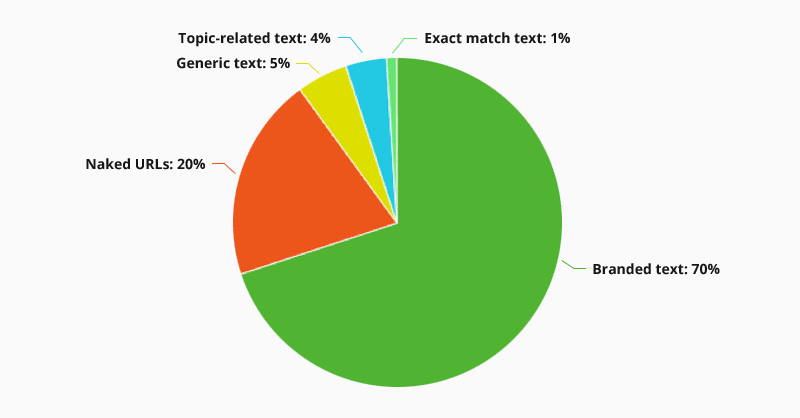
How to optimize it:

Checking your SEO competitor's links is a good way to understand what kind of link value you oppose in optimization, it will also determine how much work is needed to catch up on your website. To do this you need a tool that allows you to compare multiple sitelink profiles with many criteria. SpyGlass SEO with its domain comparison module is very precise and good. Run this tool and create a project for your site, then proceed to Domain Comparison and add your main competitor domains, one at a time. Like the following example you will see how each aspect of your link profile compares to your competitors.


Content

Content is king. But what does Google search for in quality content? Here are the 3 points your content points in the eyes of Google.

1. Use of keywords

The title / title on your website remains the strongest relevance factor with Google. Using keywords or variations in title tags is still important in 2017. Meta descriptions can also increase relevance, even if the weight is less. And make sure you do not forget to use keywords in the body of the page, given the H1 tag holds a good weight for SEO of all titles.

2. The length

In its search quality guidelines, Google mentions that the amount of page content is important for its overall quality - and therefore that will rank. Obviously, there is no length of ideal content to be sought; As Google says, "the amount of content needed for a page to be satisfactory depends on the topic and purpose of the page."

For a realistic reference of "satisfactory amount of content", see the pages that are already compatible with your keywords, and learn from their strategies.

3. Comprehensive

RankBrain (launched in October 2015) is part of Google's Hummingbird algorithm and, according to Google, is involved in every query. One of the RankBrain functions is to analyze the results with good user satisfaction metrics and identify their common features - features that make them get good search results.

Since most of the online content is text, such features are often certain terms and phrases used on the page. Think about it: if you are looking for "things to see in new york," it is logical that the comprehensive results will mention "times square." "Central park," "empire state building and so on.

But that's not always clear. Did you know all of the top 10 results for "the most famous thing in new york" many say "cream cheese"?


How to optimize it:

WebSite Auditor is a tool that lets you check pages with many on-page factors, including keyword usage and content length. The tool will also analyze the completeness of your page using the TF-IDF algorithm and make recommendations based on your main competitor.

To get started, run WebSite Auditor, create a project, and go to Content Analysis. Specify the page you're optimizing and enter your targeted keywords. Look through the on-page factors for statistics and keyword use recommendations, and check the Competitors tab to see how your main competitors are handling the given page elements.


Next, look at the Word count in the body and check how it compares to competitors.

Finally, switch to the TF-IDF dashboard for a list of keywords used by many of your competitors (remember RankBrain?) And specific usage suggestions for your content. Use these insights as inspiration to make your pages more relevant and comprehensive.

Now, it's time to make changes to your page. Jump to Content Editor and optimize it all! Once done, hit the save button in the top right corner to download optimized HTML to your hard drive ready to upload to your site.

Technical SEO

The technical platform of your site is very important for SEO (and also outside). Here are the top two factors that are important for your site's ranking.

1. Speed ​​page

Google estimates the page will load in two seconds or less from that time, and they officially ensure that speed is one of the important factors for ranking. Speed ​​also has a big impact on UX: slower pages have higher bounce rates and lower conversion rates.

The most common causes for low speed are some uncompressed elements like there are scripts, images and CSS files.

2. Mobile Friendly

If your page is not optimized for smartphones, it will not fit in mobile search at all. This is unfortunate because more than half of Google's quota is coming from a mobile device, so you should not delay it again in 2017.

Focus on mobile is likely to continue soon with Google's commitment to switch to first indexing on mobile.

How to optimize it:

To check whether your website passes Google's mobile and mobile testing, go to Content Analysis> Pages Audit in WebSite Auditor and switch to Technical factors. Check the Usability (Mobile) and Page speed (Desktop) sections, and click on any factor with Error or Warning status for details and suggestions on how to fix.

User Experience

The debate surrounding the use of behavioral factors in rank has been going on for years. However, according to Google's own words, "searching users are often the best relevant judges, so if they choose certain search results, they are likely to be relevant, or at least more relevant than the alternatives presented."

1. Click-through rate

Click through rate (CTR is the ratio of the number of times a search listing is clicked in accordance with the amount of time displayed to the searcher.The SearchMetrics study even found that CTR has the highest correlation with the rank of all the factors studied.

True, correlation is not the same as cause-effect. But it's hard to argue with real-life experiments that show that an increased CTR will soon result in a rating upgrade.

How to optimize it:

The first thing to check is your current CTR SERP. In Google Search Console, open the Search Analytics report and select Clicks, Impressions, CTR and Positions.


While the average CTR varies depending on the type of query, As a rule of thumb for CTR 30% for result # 1, then for 15% for # 2, and 10% for # 3.

If some of your CTR lists are really below this average, you need to refocus something. Think about how you can create a decent click snippet and you can see a list of competitors for inspiration. To edit and preview your Google snippet, go to WebSite Auditor, go to Content Analysis> Content Editor, and switch to Title & Meta tags. Once you create a snippet with it, press the save button to download the HTML file to your hard drive.


Conclusion

SEO is a complex, multidimensional, and ever-expanding science. It's natural if you can not afford to focus on every detail, and you also do not have to do that. If you prioritize your efforts, focus on the above eight factors, and remember to always look closely at competitors, and your business will surely get out of them in the SERPs.

Searches Related

google ranking factors seo checklist

search engine ranking factors

seo ranking factors 2016

search engine ranking factors 2017

moz ranking factors 2017

google ranking factors 2017

local seo factors

local search ranking factors 2016

3 Prediction Of The Future SEO

July 23, 2017
SEO is an ever-changing and growing industry. No longer search engine optimization is seen as a "black magic" internet but is now considered an essential part of a serious digital marketing strategy. Last year, it was estimated that businesses invested more than $ 65 billion for SEO services, and the number is projected to increase to over $ 70 billion by 2018.

The hardest thing in the search world is predicting what will happen next. As the main engine keeps updating and improving their SERP's algorithm and look, we on the field should not just wait to react. Where we believe we should be proactive and see past trends to help guide us.

In this following we make 3 predictions about the future of the SEO industry.

1. UX Will Play a Bigger Role

In the past, SEO was seen as the work of the IT team. It is viewed more as a technical role than a creative position. While SEO has many technical elements to it, at its core this is an art form. Today's SEO professionals not only need to have a technical understanding of how to optimize websites and different content types for search engines, they also need to understand how people interact with the web.

Google is obsessed with visitors and you should do just that. As search results become more and more customized, the visitor experience (UX) will play a larger role in search. If your content does not involve your visitors, you will lose, no matter how big your information.

For a better position on your site now, I'll invest the time to study your visitors inside and outside. Then, I will create content that not only helps them, but also involves them. You can do this by using a free analytics tool that tracks and learns what your visitors are doing.

If you're not currently tracking your online marketing efforts, you're not alone. But that's still not a good reason. Did you know that:

  • 45% marketing still has not formally evaluated their analysis for quality and accuracy (or even worse, not knowing if they did it or not).
  • Less than 30% of small businesses use website analysis, call tracking or voucher codes; 18% of small businesses claim not to track anything at all.

Just because other people do not take this serious does not mean you should not do it. Tools like Google Analytics and Search Console, which are all about 100% free tools, have enough information to get you started. Find out what content works and why, then make more of it. Think about what your users want when they interact with your brand online, and create a unique experience for them.

2. AMP Will Be a Ranking Factor

We now live in a divided world. Traditionally, Google operates from one document index when it pulls a search query. Currently, the process of creating two indexes, one for mobile and one for desktop, with mobile being the main index.

As we enter the first mobile world, the way we search, interact, and purchase have changed. Mobile has become our dominant device, and Google will not wait. A recent report from Hitwise (registration required) argues that in the US, mobile searches are approximately 58 percent of the overall search query.

But visitors do not just want something that looks good on mobile devices - they also want speed. In fact, Google's own research shows that 53% of people will leave sites that fail to load in three seconds or less. This is one of the big reasons Google and others have pushed the Accelerated Mobile Pages (AMP) project.

As far as we know today, AMP is not a ranking signal, but that does not mean it does not impact your search performance or your website. AMP content is featured prominently in mobile search results, often above organic listings. Do not you want your content to show up there? Additionally, if a visitor ignores sites that load slowly on a mobile device, it makes sense to prioritize the speed of a mobile page, even if you already have the top organic spots or top SEO rankings.

Furthermore, if you wait for an official announcement verification before you apply AMP, you will be too far behind to take advantage of it as it happens. So start building an AMP page for your content now!

3. AI Will Do a Search

When Google announced RankBrain last year, the search world lost its head. Today, we still do not know much about RankBrain, but it's among the top three Google rating factors. Personally, I think AI is a great thing for search. Over time, as machines learn patterns and understand content, the results will be more accurate. Another benefit to AI is that it will kill black-hat SEO, which I think is great for the industry as a whole.

While if we think RankBrain (or some other new AI technology) will eventually run a 100% search, and surely we all still feel away from that criteria. So first, we can start doing a better job of creating content that is an informative and interesting visitor. Then we can take the time to do the little things properly, like on-page SEO. And finally, we can start thinking of searching on an individual level. AI will look more personal than ever, and this will force us all in the field of digital marketing to think of segments in new ways.

We believe these three predictions will come true, and they are also important today. I hope you take the time to reflect on where you are, what you do and what new things need to be added to your search strategy to see better results today.

Amit Singhal, Indians Behind the Sophistication of Google Search Engine

July 20, 2017
Google is the most widely used search engine in the world. The main reason people use it is because Google provides relevant and fast search results. This relevance and speed is generated by Google's Google-made algorithm Larry Page and Sergey Brin.

Over time, the algorithm is updated or enhanced to improve the quality of Google search results. What is surprising is that the sophistication of the algorithm is made by an Indian-led team. He is Amit Singhal.


Amit Singhal (full name of Amitabh Kumar Singhal) was born in 1968 in Jhansi, a city in Uttar Pradesh, India. Little Amit likes Star Trek movies. From that penchant, he has the dream of making robots that can speak to humans.


Amit Singhal earned a bachelor's degree in computer science from the Indian Institute of Technology Roorkee in 1989. Amit then went on to study at the University of Minnesota Duluth, USA and earned a M.Sc in computer science in 1991. He then went to college S-3 at Cornell University, New York, USA.


Source image
At Cornell University, Amit Singhal experiences information retrieval, a branch of computer science that is the foundation of a modern search engine. Here Amit is guided by Prof. Gerard Salton who is a pioneer of information retrieval and staying digadang as the Father of Digital Search.

After earning his Ph.D. In 1996, Amit Singhal worked as a researcher at AT & T Labs. The field of research is information retrieval and speech retrieval. In 2000, Amit joins Google for his small friend's persuasion, Krishna Bharat (creator of Google News, a service that automatically indexes over 25,000 news sites in over 25 languages).

At Google, Amit Singhal is Head of the Search Quality Team. He said to Sergey Brin: "Your search engine is very good, but let me rewrite the algorithm."

In 2001 Amith Singhal rewrote Google's algorithm so the algorithm has a new ranking system and is able to distinguish Apple (software) and apple (fruit). For his achievement, Amith was awarded the Google Fellow, an honors degree awarded to a handful of the most successful Google engineers.

Not necessarily stop there, Amit and his team add new features in the Google algorithm to ensure that Google search results are relevant and qualified. Two very famous features are Panda and Penguin. Panda Algorithm is a filter to lower the ranking of sites / blogs whose content quality is low (eg blogs containing content automatically / AGC, spin results, bad grammar, etc.). The Penguin algorithm is a filter to downgrade sites / blogs that violate Google's Quality Guidelines such as paid backlinks and spam comments.

Amith Singhal rewrote Google's algorithm in 2013. This new algorithm called Hummingbird is capable of displaying complex query searches. Currently, Amit is streamlining Google's algorithm so as to provide search results from voice-based queries.

For Amith, it seems Google is the right place to realize the dream of his childhood to make a robot. Not a robot made of iron and steel, but a virtual robot created from the algorithm.

On-Page SEO: 10 Factors You Must Pay Attention

July 20, 2017
Should you pay attention to search engine optimization (SEO) in developing your blog? Can yes, or not, depending on the type of blog. In developing Blogodolar, I do not pay attention to SEO, both on-page SEO and off-page SEO (link building). However, not so when I develop an English niche blog.Based on my experience of optimizing the English niche blogs with the results of page 1 google.com, there are ten on-page SEO factors that you should pay attention to.

1. Keywords on the title

The first and most important factor of on-page SEO is placing the targeted keywords in the title. This keyword gives an overview to the search engine about the content of the blog or posting. According to Moz, the title length is 55 characters (words and spaces).

The keywords placed in the post title will automatically exist in the title of the post. However, this is not the case with keywords for blog titles. If you use WordPress, you can place keywords in the blog title by using the All in One SEO Pack or Yoast's WordPress SEO plugin.


Where should the keywords be placed in the title? If possible, place keywords at the beginning of your title to be easily recognized by potential visitors and search engines. If placing the keyword at the beginning of the title is not possible, for example, making the title ambiguous, put the keyword in the center of the title naturally.

2. Keyword density

The next factor of on-page SEO is keyword density. What keyword density means is the percentage of keywords that appear to the number of words. In order not to indicate the spread of keyword overload (keywod stuffing), you should make keyword density between 1% to 5%.

For example, you are targeting a job application letter. The keyword appears five times in the 500 word post you created. Thus, the density of the application letter on the post is 1% alias 5 divided by 500.

3. Keywords in the first and last paragraphs

In addition to the title, the targeted keyword should be placed also in the first paragraph and the last paragraph. In my opinion, this placement provides an overview of the beginning and end of the topic of discussion to search engines.

4. Number of words

In doing on-page SEO, you should also pay attention to the number of words. According to some studies, the number of words has an important impact on the position in search engine results.

The trick, if you shoot a keyword high competition, you should make a post with a minimum length of 1,500 words. Viewed from the human and search engine side, the number of words is enough to give a thorough explanation of the keywords or topics covered. In other words, your post is rich in meaning or benefits.

5. Format Heading

The heading format (H2, H3, and so on) can be used also to optimize your post structure. Which format is selected? In my opinion, it depends on the taste of bloggers. For me, the H3 format is sufficient to give an explanation of the pound-points or subheadings of the post made.

6. Alt text

Search engines can detect images via alternate text for images (alt text). For that purpose, make the best possible alternative text. Some SEO practitioners suggest this alternative text is populated with the targeted keywords. However, I ignored her suggestion because I filled out alternative text with keywords related to the targeted keyword.

7. Internal links

Do not forget to create a link to your previous post (known as internal link). In addition to providing a linked posting signal to search engines, internal links also provide additional information to visitors.

8. External links

In addition to internal links, also create links to other trusted people's blogs or sites (external links). The goal gives signals to search engines that your post refers to a trusted source or reference. Of course, external links also provide additional reference options to visitors who want to know more about the topic of your post.

9. Latent Semantic Indexing

Do not just sow keywords in your post. Conversely, sow is also a keyword that is relevant to the targeted keyword. This relevance includes latent semantic indexing (LSI). For the purpose of this LSI, I usually use synonyms or snippets of targeted keywords. For example, top-rated vacuum cleaners are synonymous best vacuum cleaners.

The use of LSI aims to signal to the search engines that your postings are natural because it promotes context, not text. I believe Google knows about these signals because the algorithms are designed to understand the context of the content.

10. Blog loading speed

The last factor is the speed of loading your blog. This factor is important because it affects the experience of your blog visitors and Google incorporates it as one of the ranking factors in its search results. Of course, the speed of loading your blog is affected hosting quality used.

By paying attention to ten factors above, on-page SEO will be simpler. So forget the keyword being bold, the keyword is tilted, the link says the key to the post itself, and the link says the key to the image in the post itself.


What on-page SEO factors have you been paying attention to?

6 Tips To Keep Your Anchor Text Visible Naturally in Google's Eyes

July 19, 2017
Anchor text (link text) is a text used to link to a blog page / site. Prior to Google Panda, its role was crucial in influencing search result rankings. In other words, if we want to improve the position of our blog, then we look for as many backlinks with anchor text in the form of a targeted keyword.

However, this does not apply. Your blog will enter Google's radar when your link building uses the same anchor text. It's likely that your blog position will go down, and even go to Google Sanbox.


How could this happen? The main factor is your anchor text is not natural so you are allegedly doing "dirty tricks" in raising the position of your blog.


If you do not want that, follow these six tips:

1. Use Anchor Text

If you shoot the keyword cheap auto insurance, then you can cut it into cheap insurance and auto insurance.

2. Use a Combination of Anchor Text Fragments

Anchor text fragment you can combine with other words. For example, a combination of anchor text auto insurance breaks on top can be best auto insurance and auto insurance deals.

3. Use Synonyms of Anchor Text

Synonym of anchor text is the equation of understanding between two anchor text or more. For example, if you are targeting cheap auto insurance keywords, then the synonyms you can use are:
  • Inexpensive car insurance
  • Less expensive automobile insurance
  • Low cost insurance for your car
  • Cheap vehicle insurance
Google is able to detect the synonyms above because relavan with cheap auto insurance.

4. Use General Anchor Text

Anchor general text form click here and read more (in Indonesian, click here and read more). This is against the advice of the SEO masters first. However, as long as it is placed on articles relevant to the targeted keyword, common anchor text will be considered relevant by Google.

5. Use URL

If your blog is new, then use your blog URL as anchor text. It gives a signal to Google that the link to your blog is natural.

6. Use Your Domain Name and Blog Name

As with the use of URLs, the use of your domain name and blog name as anchor text will be good for improving the position of the new blog.

Apart from that, the six tips above I always use in improving the niche position of my blog. The results are very effective and even unpredictable (go to page 1 of Google for keywords whose monthly search amount is more than the monthly number of major targeted keywords).